
The Woolcock Institute of Medical Research
It's not smoking, it's nicotine
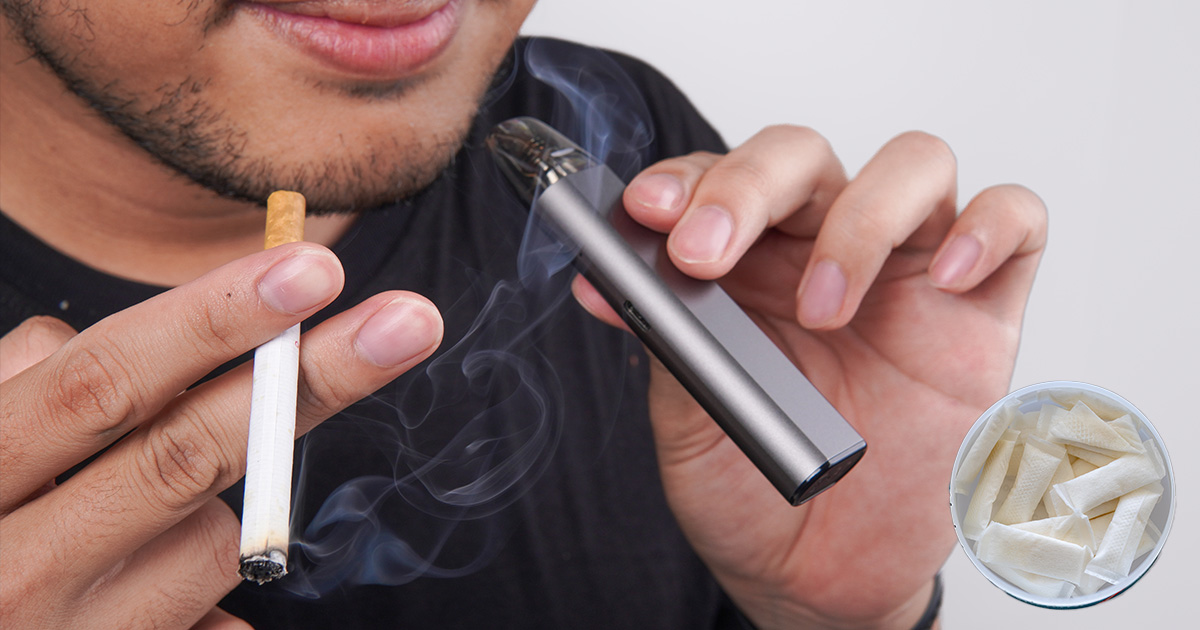
The problem isn’t just smoking. It isn’t just vaping. It’s nicotine itself.
“However you get it – cigarette, vape, chewing tobacco or oral pouch – nicotine is a powerful, fast-acting drug,” says Professor Renee Bittoun, a clinician specialising in nicotine addiction who started seeing patients at the Woolcock’s Smoking and Vaping Cessation Clinic in February.
She says public discussion often focuses on devices while underestimating the drug. “There’s this inference that nicotine on its own is benign. That’s not true.”
And it’s contrary to well-established scientific evidence – a 2007 Lancet nine-factor matrix study ranked nicotine third in addictiveness, behind only heroin and cocaine, due to its high dependence potential.
Nicotine acts quickly and wears off quickly. Its half-life is about 40 minutes, meaning blood levels fall fast and users feel the need to “top up” repeatedly throughout the day. “It’s one of the shortest-acting drugs people use,” Professor Bittoun says. “That rapid relief followed by rapid withdrawal is what drives addiction.”
Historically, she notes, that pharmacology even shaped the number of cigarettes in a pack. “If you divide an 18-hour waking day into 40-minute intervals, you get roughly 25,” she says. “That’s about how often a dependent user needs nicotine.”
FAST DELIVERY
Modern products have intensified the cycle. Vapes deliver nicotine to the lungs, where it is absorbed into the bloodstream within seconds. Oral nicotine pouches — small sachets placed in the mouth — deliver it through the lining of the mouth and can be used discreetly.
“Speed of delivery matters,” she says. “Inhaled nicotine has immediate arterial effects – constricting blood vessels and raising blood pressure straight away. The effect of smoking or vaping on respiratory health is well appreciated but the cardiovascular impact of nicotine is often underestimated.”
She describes a “hierarchy” of nicotine delivery. At the top are inhaled products like vapes, which act almost instantly and are highly dependence-producing. Oral products sit below that. At the bottom are nicotine patches, which release slowly over many hours.
“The difference isn’t just dose, it’s speed,” Professor Bittoun says. “Slow, steady delivery does not produce the same spikes or reinforcing effect.”
The mental health effects of nicotine use are also underestimated. Vaping has become a major pathway into nicotine use for younger people (Professor’s Bittoun has patients as young as nine years old) and, she says, exposure in adolescence is particularly concerning. “Nicotine affects the developing brain. Young people often say vaping helps anxiety, but nicotine and nicotine withdrawal actually create distress. The relief they feel is just temporary relief from withdrawal.”
Want to stay up to date with our research on sleep and respiratory conditions?
Sign up to our quarterly newsletter
Her clinical work includes patients with complex mental health needs, and she has seen psychological and psychiatric symptoms improve when nicotine use stops. At the same time, she stresses vulnerability to addiction varies. “Nicotine dependence is highly heritable, even more than alcohol. Some brains respond to nicotine in a way that makes addiction much more likely.”
MEASURES AND CONTROLS
Another misconception is that “cutting down” or switching to “weaker” products reduces harm. “People compensate,” she says. “They inhale more deeply, hold their breath longer, or use products more intensely. We can measure it – nicotine levels go up, not down.”
Unregulated products add further uncertainty. Illicit or poorly processed tobacco, including home-grown varieties, may carry additional risks. “Quality control is an issue, and contaminants such as mould are a concern,” she says, noting that unexplained respiratory symptoms may not always be linked back to the product being used.
Even so-called “social smoking” is not purely social. Professor Bittoun says nicotine interacts in the brain with alcohol and caffeine, which helps explain why people who rarely smoke otherwise may crave cigarettes when drinking or at cafés. “It’s a chemical interaction, not just a social habit,” she says.
Most people she treats have already tried to quit. “Ninety per cent are highly motivated,” she says. “They’ve just been misinformed.”
A common complaint is that nicotine patches “don’t work” for them but, she says, that’s often because of under-dosing or using them incorrectly. “They calculate their dose based on how much they smoke or vape, and that’s usually wrong.”
It can be safer for some patients to begin nicotine replacement while they are still smoking. “People are surprised to hear that it’s safer to smoke while using a patch than to smoke without one, because they tend to smoke less and more steadily as treatment begins,” she says.
EVIDENCE-BASED TREATMENT
A key difference in her clinic is objective testing. She measures carbon monoxide and plasma nicotine levels to establish each patient’s true exposure. “People may be using multiple products – patches when they can, cigarettes, vapes, oral products – and not realise how much nicotine they’re getting,” she says. “The numbers help guide treatment.”
Professor Bittoun also emphasises the role of pharmacotherapy in treating nicotine dependence. “There’s a combination of things that you can do with medicines, which are really, really helpful and usually misunderstood and misconstrued. These treatments replace the nicotine patients are getting from cigarettes, vapes or pouches in another format that’s less dependence producing.” In other words, the medications mimic the effect of nicotine on the brain without creating the same addictive cycle.
At the same time, behavioural strategies are introduced to break the learned link between stress and nicotine use. Treatment is gradual, not abrupt. “This isn’t ‘Monday you stop’. Most people won’t quit on day one, and that’s normal.”
Over months, the brain undergoes neuroadaptation – re-learning to function without rapid nicotine spikes. Patients learn to respond to stress without automatically reaching for nicotine. “They often say they’re less reactive and less driven by urges,” she says.
They can then be weaned off those medications because their brain has been re-wired to work without drugs.
The Smoking and Vaping Cessation Clinic at the Woolcock provides specialised assessment and evidence-based treatment for nicotine dependence. Appointments are available for people seeking structured support to stop smoking or vaping.
Find out more
Share online
Donate
We are committed to understanding and eradicating these conditions. If you would like to support our research please click the donate button.

Subscribe
Sign up with your email address to receive quarterly newsletter updates, including the latest medical findings and breakthroughs in respiratory and sleep research.
We Need Volunteers for our research











PRIVACY: The Woolcock Institute of Medical Research recognises the importance of your personal information and privacy. We will use your provided details only to contact you about information we believe will be of interest to you. Read our full Privacy Policy.
Woolcock Institute of Medical Research is a not-for-profit charity. Donations of more than $2 are tax deductible. Copyright © 2026. ABN: 88 002 198 905