
The Woolcock Institute of Medical Research
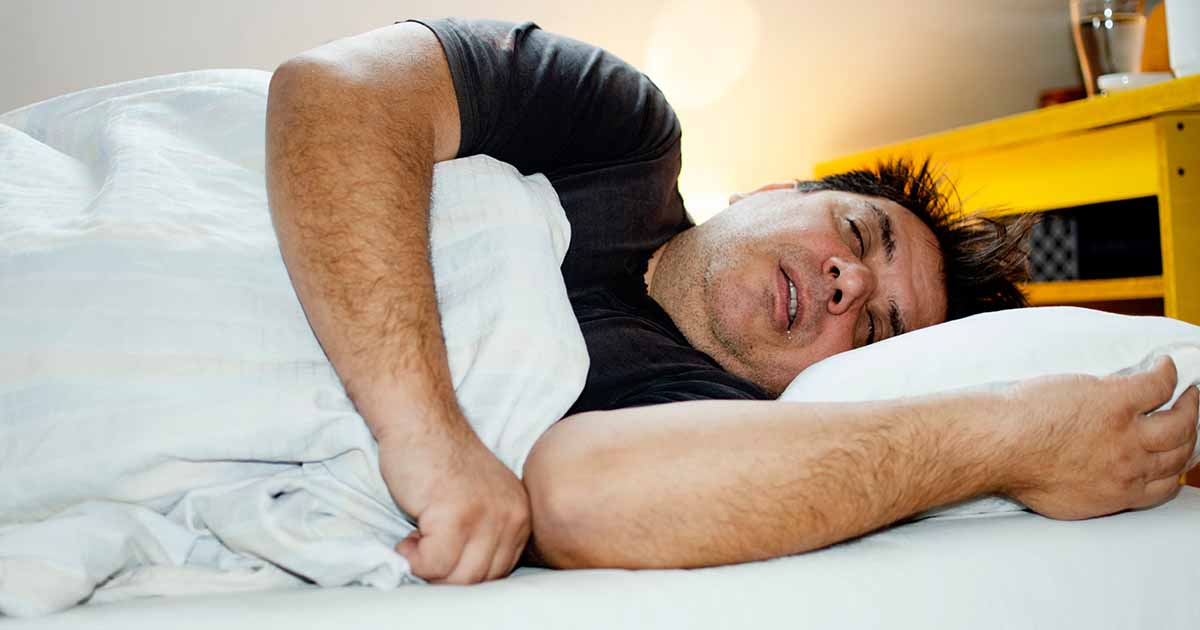
New weight-loss drug slashes sleep apnea
The first trials of the weight-loss drug retatrutide in obstructive sleep apnea have found the once-weekly injection cut the severity of the condition by more than half in people with obesity, in research led by the Woolcock’s Sleep and Circadian Research group.
The findings, published in the New England Journal of Medicine, are also the first to test any of the new generation of weight-loss medicines in people with both sleep apnea and type 2 diabetes, a group in whom these drugs typically have less impact on weight.
Lead author Professor Ron Grunstein, the Woolcock’s Head of Sleep Research, will present the results at the 28th Congress of the European Sleep Research Society.
“For many people in our trials, this drug achieved what years of diet and exercise could not,” says Professor Grunstein. “Among participants without diabetes on the most effective dose, around half ended the study with either no sleep apnea or only a mild form without excessive daytime sleepiness. For these people, a CPAP machine may no longer be needed.”
Obstructive sleep apnea (OSA) affects more than 400 million people worldwide. During sleep the upper airway repeatedly collapses, causing breathing to stop and start, oxygen levels to drop and sleep to be fragmented. The condition is linked to daytime sleepiness, motor vehicle and workplace accidents, type 2 diabetes and heart disease. Excess weight is its major reversible cause.
The two phase 3 trials, TRIUMPH-1-OSA and TRIUMPH-2-OSA, enrolled 691 adults with moderate-to-severe OSA and overweight or obesity across 71 centres internationally. Of these, 243 did not have type 2 diabetes and 448 did.
Participants were randomly assigned to weekly injections of retatrutide (4, 9 or 12 mg) or placebo for 80 weeks, alongside diet and exercise counselling.
Developed by Eli Lilly, retatrutide is the first “tricretin”: a single weekly injection that activates receptors for three weight-reducing hormones, GLP-1, GIP and glucagon. Current weight-loss medicines such as semaglutide and tirzepatide target one or two of these. The drug has drawn worldwide attention, and a large illicit market, ahead of any regulatory approval.
“Retatrutide is the most powerful anti-obesity medication we’ve seen, so it was important to test it rigorously in sleep apnea, where excess weight is such a major driver,” Professor Grunstein says. “With people already obtaining this drug illicitly, evidence from properly controlled trials matters more than ever.”
At the start of the study, participants’ breathing was interrupted an average of around 57 times per hour of sleep, almost double the threshold for severe sleep apnea. In people without diabetes, the 9 mg dose cut this by 34 events an hour (a 57% reduction), compared with 10 events an hour on placebo. In people with type 2 diabetes, the 12 mg dose cut it by 25 events an hour (41%), compared with 10 on placebo.
Participants without diabetes lost up to 22% of their body weight on average, and those with diabetes up to 18.5%, compared with around 5% on placebo.
Want to stay up to date with our research on sleep and respiratory conditions?
Sign up to our quarterly newsletter
“People with type 2 diabetes usually lose less weight on these medicines, so until now we didn’t know whether they would see the same sleep apnea benefit,” Professor Grunstein says. “These results show they benefit substantially, which matters because sleep apnea and diabetes so often go hand in hand.”
Retatrutide also cut the sleep apnea-specific hypoxic burden, a measure of the total oxygen deprivation a person experiences overnight, by up to 75%.
“Repeated drops in oxygen during sleep are thought to drive much of the heart and blood vessel damage linked to sleep apnea, so seeing that burden fall by as much as three-quarters is very encouraging,” Professor Grunstein says. “The next step is to find out whether this translates into fewer heart attacks and strokes over the long term.”
The most common side effects were gastrointestinal, including diarrhoea, nausea and constipation. These were mostly mild to moderate and occurred mainly while doses were being increased. Between 0 and 8% of participants on retatrutide stopped treatment because of side effects, compared with 3 to 4% on placebo.
CPAP (continuous positive airway pressure) currently remains the standard treatment for moderate-to-severe OSA, but many people struggle to use it every night.
Beyond sleep apnea, retatrutide had powerful effects on blood pressure, blood glucose, cholesterol and other blood fats, and markers of inflammation such as C-reactive protein (CRP).
“CPAP works very well when people use it, but it doesn’t have these effects on blood pressure, glucose, blood fats or inflammation,” Professor Grunstein says. “That’s a major advantage of a medication that tackles one of the root causes of sleep apnea. We are now running head-to-head trials comparing these medications with CPAP, as well as testing newer weight-loss medications.”
Retatrutide is not yet approved for use in Australia or elsewhere. Its long-term effects on heart and kidney health are being examined in a separate trial. The TRIUMPH trials were funded by Eli Lilly.
Find out more
Share online
Donate
We are committed to understanding and eradicating these conditions. If you would like to support our research please click the donate button.

Subscribe
Sign up with your email address to receive quarterly newsletter updates, including the latest medical findings and breakthroughs in respiratory and sleep research.
We Need Volunteers for our research











PRIVACY: The Woolcock Institute of Medical Research recognises the importance of your personal information and privacy. We will use your provided details only to contact you about information we believe will be of interest to you. Read our full Privacy Policy.
Woolcock Institute of Medical Research is a not-for-profit charity. Donations of more than $2 are tax deductible. Copyright © 2026. ABN: 88 002 198 905