
The Woolcock Institute of Medical Research
OAT an increasingly viable OSA solution
Many people who snore or have sleep apnea, avoid addressing the issue because the idea of treatment brings to mind uncomfortable, bulky and noisy CPAP devices. But times have changed. CPAP technology has evolved and there are well-established alternatives including Oral Appliance Therapy, even for some patients with more severe obstructive sleep apnea (OSA).
Advancements over the past 10 years mean modern CPAP masks are now smaller, systems are quieter and therapy more user-friendly than ever but it’s not the right solution for everyone and many still struggle with compliance.
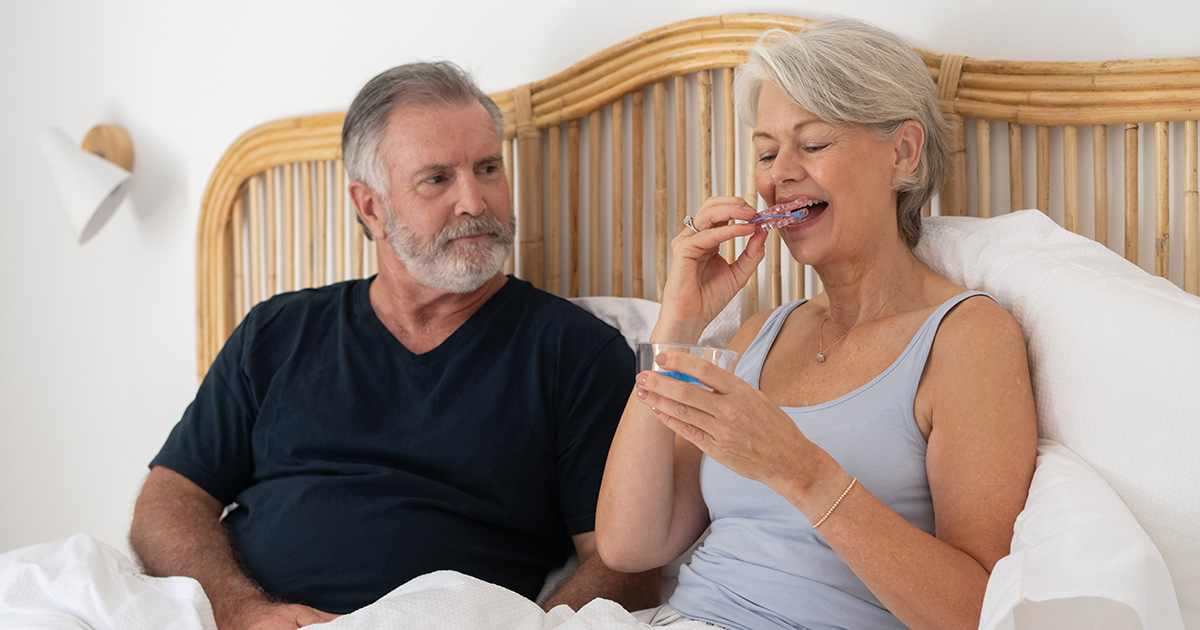
And, just as CPAP has changed, so have oral appliances which are offering an increasingly viable solution for suitable patients.
These devices are far more than the over-the-counter “boil and bite” mouthguards sold in pharmacies.
“A mandibular advancement splint or MAS is nothing like a mouthguard,” says Dr Michelle Donegan, a dental sleep medicine specialist in the Woolcock Clinic. “The technology and materials have changed completely in the past 5-10 years.”
SCANNED AND DELIVERED
Today’s oral appliances are designed using digital scanning and 3D printing technology. Instead of messy impression or bulky fittings, a small intraoral scanner captures detailed images of the teeth and jaw.
“It’s like a camera in your mouth,” explains Dr Donegan. “The data is sent directly to the lab, which means the fit is far more accurate and comfortable.”
Want to stay up to date with our research on sleep and respiratory conditions?
Sign up to our quarterly newsletter
The result is a slim, durable device that patients can wear easily and that is designed to last six-eight years.
While device design itself hasn’t changed dramatically, the materials, comfort and patient experience have. Appliances are smaller, easier to adjust and better tolerated than earlier versions. This has contributed to growing acceptance among both patients and medical practitioners. “Fifteen or twenty years ago, many physicians weren’t confident in oral appliances,” Dr Donegan says. “Now there’s much better communication and collaboration between doctors and dental sleep specialists.”
Dental sleep medicine has also become more professionalised in Australia. The Australian Sleep Association now recognises a fellowship in dental sleep medicine, ensuring only specially trained clinicians manage oral appliance therapy. “The management, expertise, and care a patient receives are critical,” Dr Donegan notes. "Oral appliances require careful assessment to ensure the best outcome for each patient, rather than being a generic solution.”
CASE SELECTION IS KEY
Careful case selection is essential. Suitability for oral appliance therapy depends on factors such as jaw position, facial profile and airway anatomy – not just the severity of OSA on paper. Certain features, such as a shorter chin or specific jaw shapes, often respond particularly well. Importantly, these devices are not just for mild OSA.
“We do see patients with moderate and even severe OSA who do well.”
Even patients with more severe OSA who struggle with CPAP compliance may benefit. “CPAP non-compliant patients can often transition to a professionally fitted oral appliance without returning to the physician for additional testing,” Dr Donegan says.
Age and gender are also factors. While middle-aged men with rising blood pressure are typical candidates, post-menopausal women and younger women with unexplained daytime fatigue are increasingly recognised as patients who may benefit. “These patients often fly under the radar,” Dr Donegan notes. “Proper assessment can uncover OSA in individuals who do not fit the classic profile.”
GP ADVICE, PATIENT PREFERENCE
For general practitioners, Dr Donegan’s advice is clear: avoid over-the-counter devices, understand that technology and materials have improved dramatically and remember that careful case selection is essential. Patient preference should guide treatment decisions, with accurate diagnosis and professional assessment as the foundation of success.
If you’ve been diagnosed with OSA or have persistent snoring, a consultation with a dental sleep medicine specialist can help determine whether a modern oral appliance is right for you. These devices are custom-fitted, comfortable and designed to improve your sleep quality and overall health.
To learn more or book a consultation, speak with your GP for a referral to Dr Michelle Donegan at the Woolcock Clinic. Better sleep is possible — start your journey today.
Find out more
Share online
Donate
We are committed to understanding and eradicating these conditions. If you would like to support our research please click the donate button.

Subscribe
Sign up with your email address to receive quarterly newsletter updates, including the latest medical findings and breakthroughs in respiratory and sleep research.
We Need Volunteers for our research











PRIVACY: The Woolcock Institute of Medical Research recognises the importance of your personal information and privacy. We will use your provided details only to contact you about information we believe will be of interest to you. Read our full Privacy Policy.
Woolcock Institute of Medical Research is a not-for-profit charity. Donations of more than $2 are tax deductible. Copyright © 2026. ABN: 88 002 198 905