
The Woolcock Institute of Medical Research
Lung cancer and never-smokers
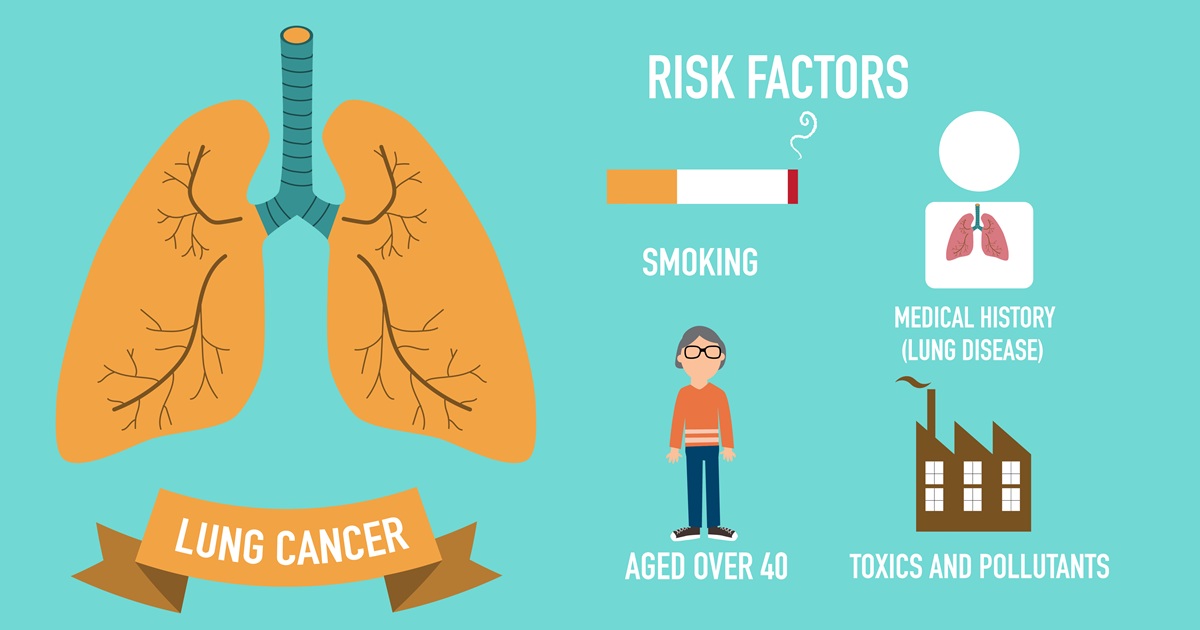
For decades, lung cancer has been closely associated with smoking — and for good reason. Smoking remains the single biggest risk factor for developing the disease and is responsible for the majority of lung cancer cases worldwide. But researchers have become increasingly interested in another group of patients: people who develop lung cancer despite having never smoked.
Although lung cancer in never-smokers is less common than smoking-related lung cancer, it is far from rare. Researchers estimate that between 10% and 25% of lung cancers worldwide occur in people who have never smoked, making it an important area of research in its own right. As smoking rates have declined in many countries, the proportion of lung cancers diagnosed in never-smokers has become more noticeable, prompting scientists to ask an important question: why does this happen?
The simple answer is that there isn’t a single explanation.
Like many cancers, lung cancer develops through a complex interaction between genetics, environmental exposures and biological changes that occur over time. While smoking dramatically increases the risk, it is not the only pathway by which lung cancer can develop.
Researchers are investigating a wide range of possible contributors. Long-term exposure to air pollution has emerged as one of the strongest areas of interest. Fine airborne particles produced by traffic, industry and other sources can penetrate deep into the lungs, where they may contribute to inflammation and damage to DNA over many years. A major international study published in 2025 found that people exposed to higher levels of fine-particle air pollution had more cancer-driving genetic mutations in their tumours, providing some of the strongest evidence yet linking air pollution with lung cancer in never-smokers.
Want to stay up to date with our research on sleep and respiratory conditions?
Sign up to our quarterly newsletter
Scientists are also studying other potential risk factors, including exposure to radon gas, second-hand tobacco smoke, occupational exposures such as asbestos or diesel exhaust, previous radiation therapy to the chest, and inherited genetic susceptibility. For many patients, however, no obvious cause can be identified, highlighting how much there is still to learn.
Researchers have also discovered that lung cancers in never-smokers often differ biologically from those that develop in smokers. The most common type is adenocarcinoma, and these tumours are more likely to carry certain genetic changes that may respond to targeted therapies. Understanding these biological differences is helping researchers develop more personalised approaches to treatment and identify new therapeutic targets.
This research is changing how scientists think about lung cancer. Rather than viewing it as a single disease caused primarily by smoking, researchers increasingly recognise that it is a diverse group of diseases with multiple causes and distinct biological pathways.
Importantly, this growing understanding does not diminish the dangers of smoking. Smoking remains the greatest preventable cause of lung cancer and quitting smoking is one of the most effective ways to reduce an individual’s risk. Also, research into never-smokers is expanding our understanding of lung cancer as a whole, helping explain why some people develop the disease without traditional risk factors and opening new avenues for prevention, diagnosis and treatment.
Around the world, researchers are now combining tumour samples, genomic analysis, environmental data and large population studies to better understand these cancers. By identifying the factors that contribute to lung cancer in never-smokers, they hope to improve early detection, develop more precise treatments and ultimately reduce the number of people affected by this disease.
Every new discovery reinforces an important message: while smoking remains the leading cause of lung cancer, it is not the only cause. Understanding why lung cancer develops in never-smokers is one of the fastest-moving areas of cancer research—and one that has the potential to benefit all people affected by lung cancer, regardless of whether they have ever smoked.
Find out more
Share online
Donate
We are committed to understanding and eradicating these conditions. If you would like to support our research please click the donate button.

Subscribe
Sign up with your email address to receive quarterly newsletter updates, including the latest medical findings and breakthroughs in respiratory and sleep research.
We Need Volunteers for our research











PRIVACY: The Woolcock Institute of Medical Research recognises the importance of your personal information and privacy. We will use your provided details only to contact you about information we believe will be of interest to you. Read our full Privacy Policy.
Woolcock Institute of Medical Research is a not-for-profit charity. Donations of more than $2 are tax deductible. Copyright © 2026. ABN: 88 002 198 905