
The Woolcock Institute of Medical Research
What makes lung cancers different?
When someone is told they have lung cancer, it can sound like a single diagnosis with a single treatment pathway. But one of the most important discoveries in modern cancer research is that lung cancer is not one disease. In fact, it is a collection of different diseases, each with its own biology, behaviour and response to treatment.
Understanding these differences has fundamentally changed the way researchers and clinicians think about lung cancer. Rather than asking simply, “Does this person have lung cancer?” they are increasingly asking, “What type of lung cancer is this, and what makes this particular tumour unique?”
The first distinction doctors make is between two broad categories: small cell lung cancer and non-small cell lung cancer. These cancers behave differently, grow at different rates and are often treated in different ways. But even within these categories, there is enormous diversity.
No two lung cancers are exactly alike.
Every tumour develops through a series of genetic and molecular changes. These changes affect how cancer cells grow, communicate with each other, evade the immune system and spread to other parts of the body. Even two people diagnosed with the same subtype of lung cancer may have tumours with very different biological characteristics.
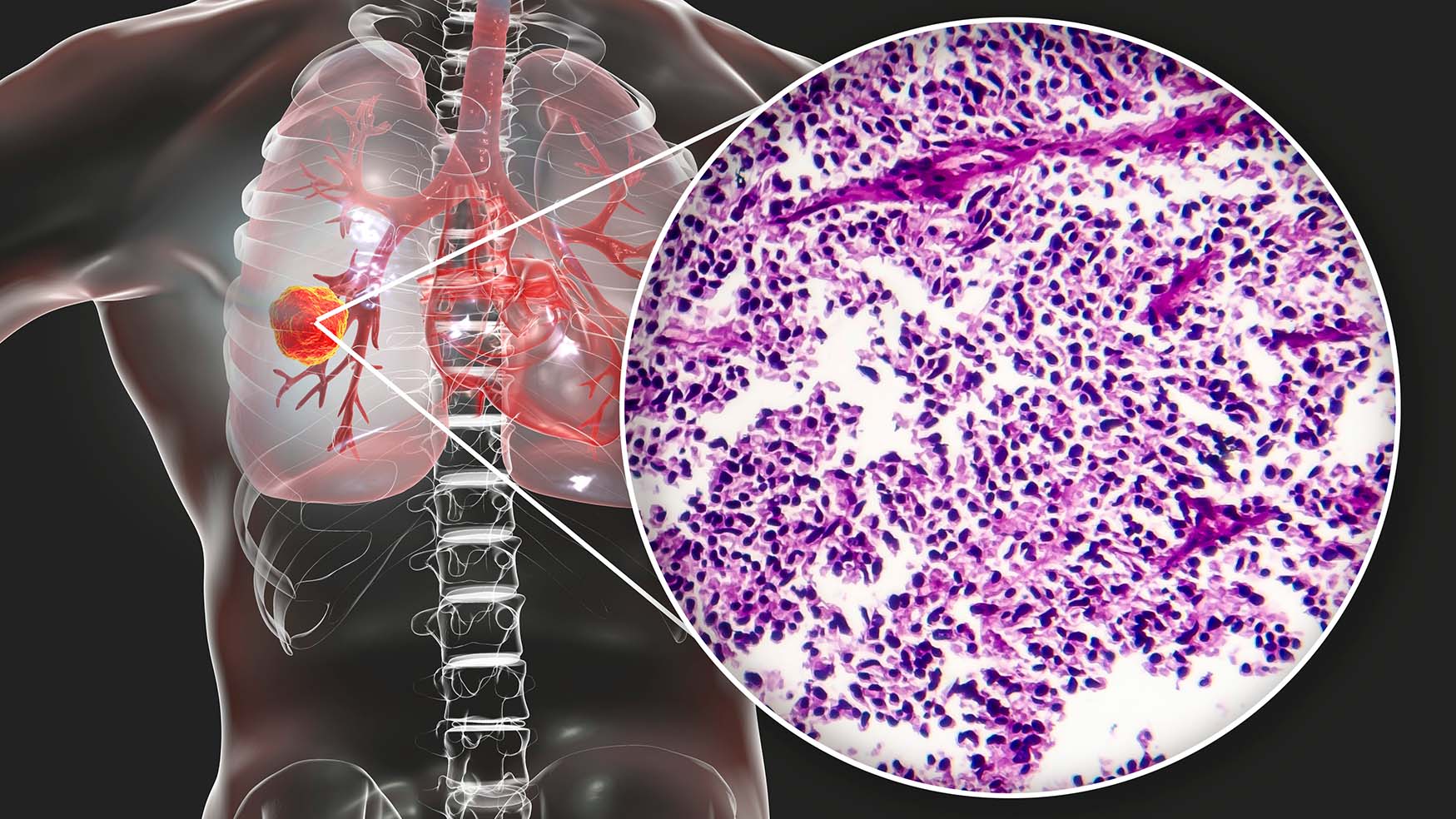
You can think of each tumour as having its own fingerprint. While two cancers may look similar under a microscope, their underlying biology can tell a very different story.
Want to stay up to date with the Woolcock's research on sleep and respiratory conditions?
Sign up to our quarterly newsletter
Researchers are working to understand these differences in extraordinary detail. Using sophisticated laboratory techniques, they examine tumour tissue to identify changes in genes, proteins and other molecules that drive cancer growth. These discoveries are helping scientists understand why some cancers respond well to treatment while others are more resistant, why some grow slowly while others progress rapidly, and why patients with apparently similar diagnoses can have very different outcomes.
This deeper understanding is changing the way lung cancer is treated.
For many years, treatment decisions were based largely on where the tumour was located and how far it had spread. Early-stage lung cancers were treated by surgery alone while late-stage cancers were managed by chemotherapy or radiotherapy. While those factors remain important, today’s clinicians increasingly use molecular information to guide treatment choices. Some patients may benefit from targeted therapies that block specific genetic changes driving their cancer. Others may be candidates for immunotherapy, which works by helping the body’s own immune system recognise and attack cancer cells.
This approach, often called precision medicine or personalised medicine, aims to match the right treatment to the right patient based on the biology of their individual cancer.
Behind every advance in precision medicine is years of research. Scientists rely on tumour samples generously donated by patients, sophisticated laboratory models and carefully designed clinical trials to understand how lung cancers develop and how they respond to treatment. By comparing hundreds or thousands of tumours, researchers can identify patterns that would never be visible from studying a single patient alone.
Researchers are also asking new questions that were unimaginable only a generation ago. Why do some tumours become resistant to treatment? How does the tumour interact with the immune system? Can subtle biological changes be detected before a tumour becomes visible on a scan? Could understanding the earliest stages of cancer development lead to earlier diagnosis or even prevention?
These questions are driving a new era of lung cancer research.
Importantly, this growing understanding benefits all patients—not just those receiving the newest therapies. As researchers learn more about the biology of lung cancer, they are improving diagnostic tests, refining treatment guidelines and identifying better ways to predict how individual cancers are likely to behave. This allows clinicians to make more informed decisions and helps avoid treatments that may be less effective for particular patients.
While there is still much to learn, one thing is now clear: lung cancer is far more complex than once believed. Every tumour has its own biological story, and understanding that story is helping researchers move beyond a one-size-fits-all approach to care.
Each discovery brings us closer to a future where lung cancer treatment is guided not only by where a cancer starts, but by what makes that cancer unique. By understanding those differences, researchers are laying the foundation for more precise diagnoses, more personalised treatments and, ultimately, better outcomes for people living with lung cancer.
Find out more
Share online
Donate to Lung Cancer Research
We are committed to understanding and eradicating these conditions. If you would like to support our research please click the donate button.

Subscribe
Sign up with your email address to receive quarterly newsletter updates, including the latest medical findings and breakthroughs in respiratory and sleep research.
We Need Volunteers for our research











PRIVACY: The Woolcock Institute of Medical Research recognises the importance of your personal information and privacy. We will use your provided details only to contact you about information we believe will be of interest to you. Read our full Privacy Policy.
Woolcock Institute of Medical Research is a not-for-profit charity. Donations of more than $2 are tax deductible. Copyright © 2026. ABN: 88 002 198 905