
The Woolcock Institute of Medical Research
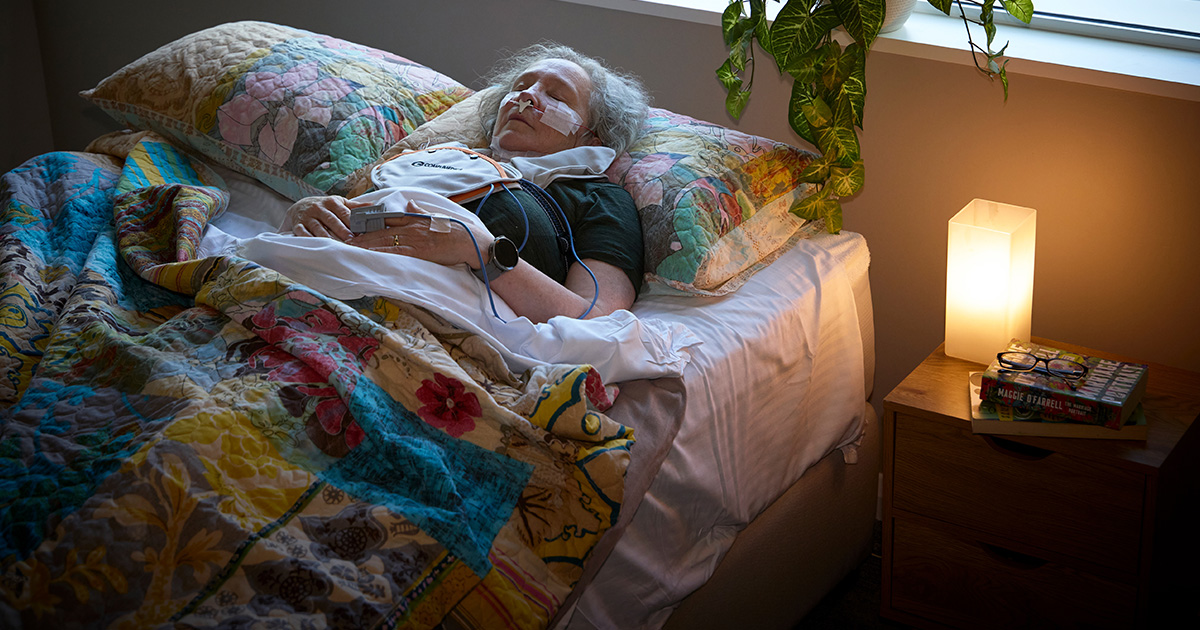
Sleep changes everything
For most of her life, Narelle Wilson says sleep came easily. Reliable. Automatic. “I was a terrific sleeper,” she explains. Then, as she approached menopause, her nights changed — and the loss of sleep became, in her words, “the worst health issue I’ve had in my life.”
What makes her story powerful isn’t just the diagnosis that followed — insomnia and sleep apnea — but the lived reality of what long-term poor sleep does to a person.
After years of broken nights, she reached a point where she told her doctor plainly: “I’m like a zombie now.”
The exhaustion didn’t stay contained to the bedroom. It seeped into everything.
“Oh, it affected everything,” Wilson says. “I just couldn’t concentrate.”
A SLEEP-DEPLETING CYCLE
At the time, she was working as a contractor in financial business management — complex, detail-heavy work that demands accuracy and mental clarity. Instead, she found herself pushing through fog.
“It was really hard to try to get organised to even get to places. It was hard to organise reports for people. Then it was even harder to present them,” she says. “Things just took so much longer … it just made everything laborious.”
The cognitive strain created a difficult cycle: the more work took longer, the later she worked – and the more her sleep suffered.
Poor sleep also reshaped her personality and relationships. “Because you’re tired and crabby, it affects your relationship,” she says. With a wry honesty, she adds that her partner of 44 years “even laughs and says it’s the worst health problem he’s ever had too — because it really changes you.
Motivation dropped. Social energy faded. Over time, she says, isolation crept in. “Yeah, I think so … for sure.”
Mood is also affected by chronic insomnia and "the fear of the fear of not sleeping". We also want time out when we sleep so we don’t have to think, feel or be responsible.
Want to stay up to date with our research on sleep and respiratory conditions?
Sign up to our quarterly newsletter
THE ROAD TO SOLUTIONS
Looking for answers – and access to proper assessment – Narelle joined a sleep research trial at the Woolcock. The study focused on productivity and driver safety in people who were sleep deprived. It gave her something she had been missing: real data about her sleep and a pathway forward.
“That was great,” she says. “I kind of did that and then got a result.”
Through the research pathway, she was referred to cognitive behavioural therapy for insomnia (CBT-I), which she credits as a turning point. Not because it magically removed every-night disruption – but because it helped her understand and manage sleep in practical ways.
“The thing that I think really made a difference was identifying what stopped me sleeping,” she says.
The changes were often small but specific: stopping food and exercise well before bed, building a wind-down routine, adjusting bedding, even moving stimulating tasks like brushing her teeth to earlier in the evening. CBT-I also helped with racing thoughts at night.
TANGIBLE RESULTS
“One of their suggestions was to have a pad of paper handy … if stuff’s going through your head to write it down,” she says. After one particularly busy night of thoughts, she discovered she had written over the same page in the dark. “I didn’t have any real record of my thoughts the next morning – but it helped me sleep, so it didn’t matesearch follow-up also helped her navigate conflicting sleep apnea test results and treatment options with greater confidence. That consistency of care is one reason she later chose to volunteer on further studiay, after years of research-guided support and sleep therapy, Narelle says: “I’m sleeping better now than I have done for the past 16 years.”
A simple statement, maybe, but it carries the weight of what sleep loss costs, and what good research can give back.
Find out more
Share online
Donate
We are committed to understanding and eradicating these conditions. If you would like to support our research please click the donate button.

Subscribe
Sign up with your email address to receive quarterly newsletter updates, including the latest medical findings and breakthroughs in respiratory and sleep research.
We Need Volunteers for our research











PRIVACY: The Woolcock Institute of Medical Research recognises the importance of your personal information and privacy. We will use your provided details only to contact you about information we believe will be of interest to you. Read our full Privacy Policy.
Woolcock Institute of Medical Research is a not-for-profit charity. Donations of more than $2 are tax deductible. Copyright © 2026. ABN: 88 002 198 905