
The Woolcock Institute of Medical Research
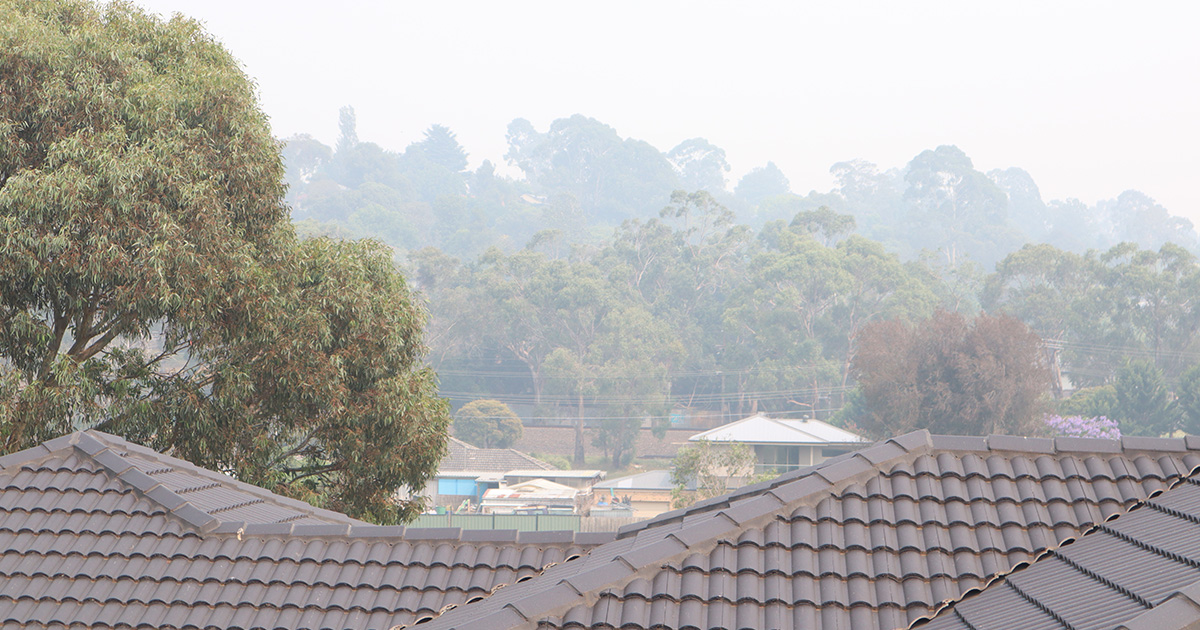
High fire danger
Bushfire smoke is more than an irritant in the air – it is a complex mixture of gases and fine particles that can have a significant effect on how well you breathe, how efficiently your blood carries oxygen to your vital organs and even how you sleep. As bushfires become more frequent and prolonged, understanding how smoke exposure affects the body is increasingly important, particularly during long fire seasons or repeated smoke events.
“With bushfires (or any fire for that matter), the danger to your health depends largely on how close you are to the source,” says Distinguished Professor Brian Oliver, research leader of the Woolcock’s Respiratory Cellular and Molecular Biology group. “In the immediate fire zone, extreme heat is the biggest danger causing direct injury to airways, lungs and other organs. At the same time, fires release dangerous gases, particularly carbon monoxide which can quickly build up while oxygen levels drop. Up to one kilometre from the fire source and you’re breathing in air that is high in carbon monoxide and low in oxygen which can seriously impair the body’s ability to deliver oxygen to vital organs even over a short period of time.”
“If you’re further away, fine particulate matter is the major danger. Bushfire smoke contains PM2.5 – particles smaller than 2.5 micrometres in diameter – which, because they are so small, can bypass the body’s natural filtering systems in the nose and upper airways and travel deep into the lungs, reaching the bronchioles and alveoli where oxygen exchange occurs.”
Once inhaled, PM2.5 triggers inflammation of the airway lining, increasing mucus production and narrowing the airways. This can worsen symptoms such as coughing, chest tightness, wheezing and shortness of breath. People with asthma, chronic obstructive pulmonary disease (COPD), cardiovascular disease and respiratory infections are particularly vulnerable, but even healthy individuals can experience reduced lung function during heavy smoke exposure.
FLOW-ON EFFECTS
Inflammation in the lungs causes mucous production and/or bronchoconstriction and this limits the amount of air entering and leaving the lungs. As a result, blood oxygen levels can fall, particularly during prolonged or repeated smoke exposure. This effect may be subtle in healthy adults but can be more pronounced in older people, children, pregnant women and those with pre-existing lung or heart conditions.
Reduced oxygenation can contribute to fatigue, headaches, dizziness and reduced exercise tolerance. At night, when breathing naturally becomes slower and shallower, these effects may be amplified, especially if smoke exposure continues indoors due to poor air sealing or inadequate filtration.
Want to stay up to date with our research on sleep and respiratory conditions?
Sign up to our quarterly newsletter
And that affects your sleep which is naturally made up of cycles of light sleep, deep slow-wave sleep and rapid eye movement (REM) sleep.
Airway irritation and inflammation increase the likelihood of micro-arousals — brief awakenings that fragment sleep without the person necessarily being aware of them. That means you’re getting less restorative deep sleep and REM sleep, leading to an unrefreshing night even when you’ve been “asleep” for the recommended 7-8 hours.
Reduced oxygen levels can also trigger a stress response in your body during sleep. The brain becomes more vigilant to breathing irregularities, increasing sympathetic nervous system activity. This can result in lighter sleep, more frequent awakenings and difficulty returning to sleep after disruptions.
People with sleep-disordered breathing, such as obstructive sleep apnoea, may be particularly affected. Smoke-related airway swelling can worsen airway collapse during sleep, increasing apnea events and further lowering oxygen saturation overnight.
TRIPLE TROUBLE
Extended bushfire smoke events mean people can find themselves experiencing impaired breathing during the day combined with inadequate restorative sleep at night. And poor sleep quality affects immune function, mood, cognition and cardiovascular health.
Health authorities recommend minimising exposure by staying indoors when smoke levels are high, using air purifiers with HEPA filters, sealing gaps where outdoor air enters your home or workplace and avoiding strenuous activity. For those with respiratory or sleep conditions, maintaining regular medication use and monitoring symptoms is particularly important.
“Bushfire smoke doesn’t just affect the lungs – it affects how the body breathes, rests and recovers,” says Distinguished Professor Oliver. “That’s why smoke exposure can feel so exhausting, even when the fire isn’t close by.”
Find out more
Share online
Donate
We are committed to understanding and eradicating these conditions. If you would like to support our research please click the donate button.

Subscribe
Sign up with your email address to receive quarterly newsletter updates, including the latest medical findings and breakthroughs in respiratory and sleep research.
We Need Volunteers for our research











PRIVACY: The Woolcock Institute of Medical Research recognises the importance of your personal information and privacy. We will use your provided details only to contact you about information we believe will be of interest to you. Read our full Privacy Policy.
Woolcock Institute of Medical Research is a not-for-profit charity. Donations of more than $2 are tax deductible. Copyright © 2026. ABN: 88 002 198 905