
The Woolcock Institute of Medical Research
Can your environment change your genes?
We often hear that certain diseases “run in families” or that some people are genetically predisposed to particular health conditions. It’s easy to assume that our genes determine our future — that the DNA we’re born with dictates our health for the rest of our lives.
But the reality is far more interesting.
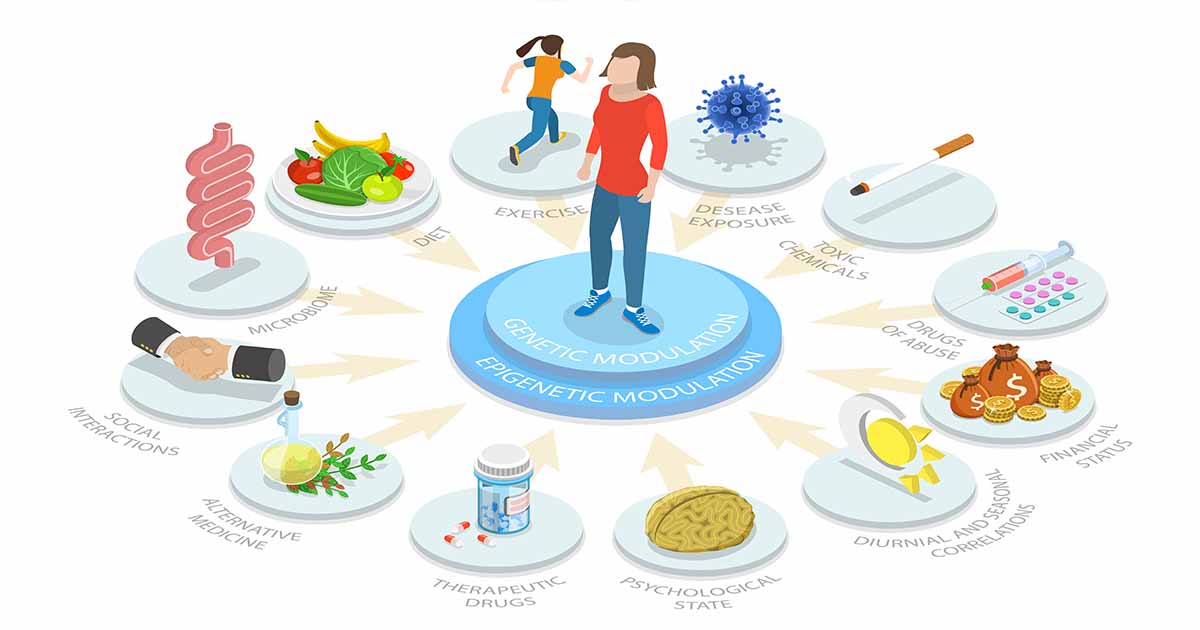
While we inherit our genes from our parents, scientists now know that our environment can influence how those genes behave. This field of research, known as epigenetics, is transforming the way we think about health and disease, including many respiratory conditions.
To understand epigenetics, it helps to think of your DNA as a vast instruction manual. Every cell in your body contains the same set of genetic instructions, yet a lung cell behaves very differently from a skin cell or a muscle cell. That’s because different cell types “read” different parts of the instruction manual.
Epigenetics is the system that helps control which instructions are read and which remain silent. Rather than changing the DNA sequence itself, epigenetic changes act like switches or dimmer controls, turning genes on, turning them off or adjusting how active they are.
These switches are influenced by many factors throughout our lives.
Everything from the air we breathe to the food we eat, infections we experience, medications we take and the natural ageing process may affect how genes are regulated. In respiratory research, scientists are particularly interested in understanding how exposures such as cigarette smoke, air pollution and chronic inflammation influence gene activity within the lungs.
This is one reason why two people with similar genetic backgrounds may experience very different health outcomes. Even identical twins become increasing discordant in their health as they age due to small drifts in the epigenetics settings that occur over time. While genetics provides the blueprint, environmental exposures and life experiences can influence how that blueprint is used over time.
Researchers are also investigating why some people appear to recover well after respiratory illness while others develop chronic lung disease. Although there is rarely a single explanation, epigenetics may provide some of the answers by helping explain how cells respond differently to the same environmental challenge.
Importantly, epigenetics does not mean that our DNA is being rewritten. The underlying genetic code remains the same. Instead, researchers are studying how the body’s natural system of gene regulation changes throughout life and how these changes influence health.
Want to stay up to date with our research on sleep and respiratory conditions?
Sign up to our quarterly newsletter
This is particularly relevant in lung disease because the lungs are constantly exposed to the outside environment. Every day they encounter air pollution, allergens, viruses, bacteria and, for some people, cigarette smoke or vaping aerosols. Understanding how these exposures influence gene activity may help explain why some people develop diseases such as asthma, chronic obstructive pulmonary disease (COPD) or lung cancer, while others exposed to similar environments do not. Most remarkably of all, it is now known that environmental we experience as a fetus within our mother’s womb can modify how these cell-type specific epigenetics setting are encoded, which in turn can influence our health and disease predisposition throughout life.
Around the world, scientists are using increasingly sophisticated technologies to study these molecular changes. By examining patterns of gene activity in lung tissue and other biological samples, we hope to identify early changes that occur before disease develops, understand why some diseases progress more rapidly than others and discover new opportunities for treatment.
The field is still relatively young, but it is advancing rapidly. Rather than viewing genes as a fixed set of instructions, researchers now recognise that they operate within a dynamic system that responds to the world around us. This understanding is opening new avenues for respiratory research, helping scientists explore not only which genes are involved in disease, but how those genes are regulated throughout a person’s lifetime.
Ultimately, epigenetics reminds us that our genes are only part of the story. They provide the blueprint, but our environment, our experiences and the way our cells respond to them all contribute to how that story unfolds. By understanding these complex interactions, researchers hope to uncover new ways to prevent disease, improve treatments and support healthier lungs throughout life.
The Woolcock's Epigenetics of Chronic Disease research group was established in 2023 with the goal of identifying the key causative epigenetic modifications occurring in a range of chronic cardiopulmonary diseases. These investigations will take advantage of recent advances in long-read gene sequencing technology to enable us to draw a much more complete picture of the epigenetic causation of chronic disease. It is envisaged that this more detailed picture will provide for a better understanding of the underlying causes of disease resulting from modern lifestyles and provide clear targets for therapeutic intervention.
Find out more
Share online
Donate
We are committed to understanding and eradicating these conditions. If you would like to support our research please click the donate button.

Subscribe
Sign up with your email address to receive quarterly newsletter updates, including the latest medical findings and breakthroughs in respiratory and sleep research.
We Need Volunteers for our research











PRIVACY: The Woolcock Institute of Medical Research recognises the importance of your personal information and privacy. We will use your provided details only to contact you about information we believe will be of interest to you. Read our full Privacy Policy.
Woolcock Institute of Medical Research is a not-for-profit charity. Donations of more than $2 are tax deductible. Copyright © 2026. ABN: 88 002 198 905